
United States · Guide · Updated 2026-09-25
Fall protection for seniors at home: a practical US guide
One in four Americans aged 65 and older falls each year, and fewer than half tell their doctor. Protecting a senior at home combines two layers: reducing the chance of falling (exercise, medication review, vision, home hazards) and reducing the harm when a fall happens anyway (impact protection, fast help). This guide walks through both layers with CDC guidance and explains honestly where a wearable airbag vest fits.
The numbers behind the risk
More than 14 million older adults in the US report a fall every year (CDC, 2026). About 37% of those who fall report an injury that needed medical treatment or restricted their activity for at least a day, roughly 9 million fall injuries a year. Falls cause about 3 million emergency department visits and 1 million hospitalizations annually, and they are the most common cause of traumatic brain injury. In 2023, 41,400 older adults died from unintentional falls, a rate of 69.9 per 100,000 (NCHS).
Two facts change how families should think about it: falling once doubles the chance of falling again, and fewer than half of older adults who fall tell their doctor. A first fall, even without injury, is the moment to act.
Layer 1: reduce the chance of falling (CDC STEADI)
Strength and balance. Programs such as tai chi or evidence-based balance classes reduce falls; ask the doctor or a physical therapist for a plan adapted to the person's condition.
Medication review. Sedatives, sleep aids, some antidepressants and blood-pressure medicines increase fall risk, especially when combined. A pharmacist or physician can review the list once a year.
Vision and feet. Annual eye exams, updated glasses, treatment of cataracts, and well-fitting shoes with non-slip soles.
Home hazards. Remove loose rugs and cords, add grab bars in the bathroom and rails on both sides of stairs, improve lighting (night lights between bed and bathroom), keep frequently used items within reach, and consider a raised toilet seat and a shower chair.
Layer 2: reduce the harm when a fall happens
Even with perfect prevention, some falls will occur. Harm reduction has three tools. Impact protection: hip protectors (padded garments) and wearable airbag vests reduce the force on the hip and, for airbag vests, the back and head. Fast help: a medical alert (PERS) pendant or watch, or a phone within reach, shortens the time spent on the floor, which is itself a risk factor for complications. Bone health: treating osteoporosis reduces the chance that a fall becomes a fracture.
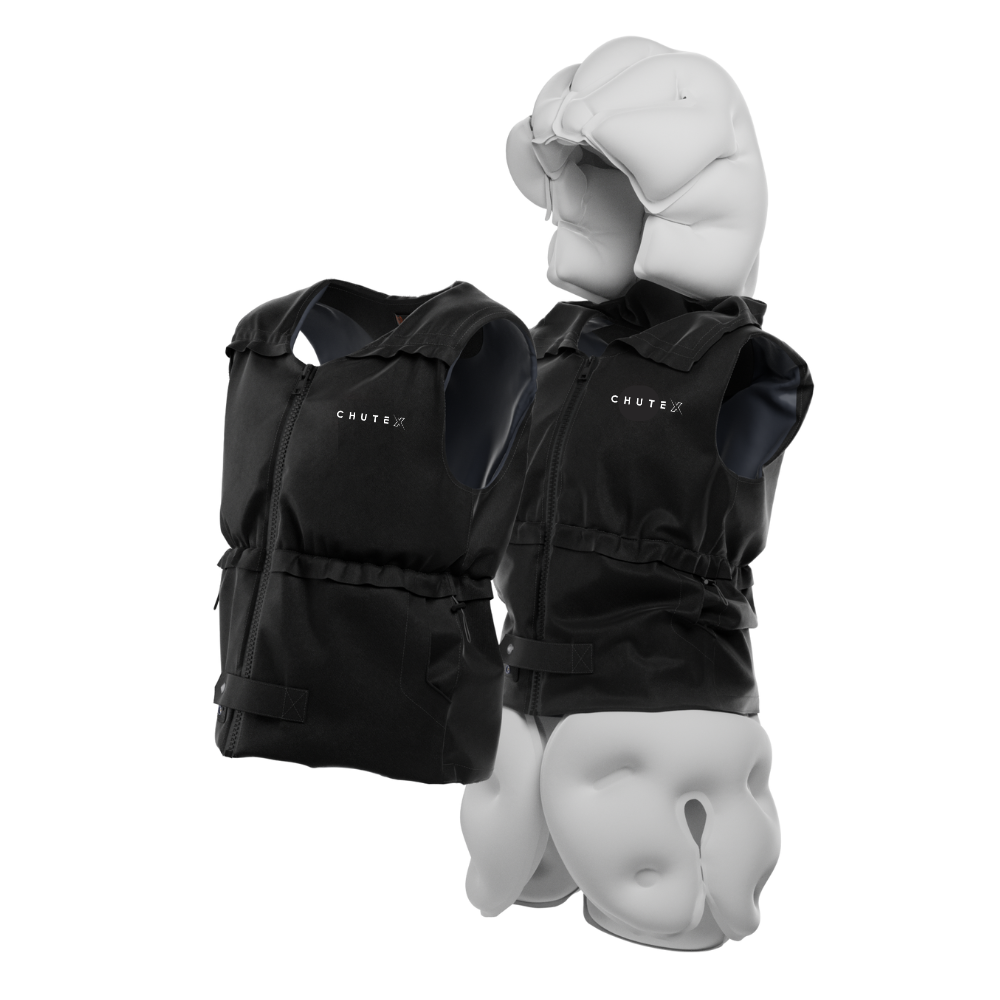
How an airbag vest fits: the Chutex Elder vest detects a fall in progress and inflates before impact around the hips, lower back and head. It is worn over clothing, is reusable after replacing the cartridges and can notify configured caregivers through the Chutex app. It does not prevent the fall and does not call 911; it is personal protective equipment, not a medical device, and it has not been cleared or evaluated by the FDA.
After a first fall: a 7-day plan
Day 1: check for injury; if the person hit their head, especially on blood thinners, see a doctor right away. Days 2 to 3: tell the primary care physician about the fall and ask for a fall-risk assessment (the STEADI screening takes minutes). Days 4 to 5: medication review and vision check scheduled; home walkthrough with the checklist above. Days 6 to 7: choose the harm-reduction tools, alert device and/or impact protection, and start a balance program. Write down what happened and when: recurrence patterns (night, bathroom, medication times) are the most useful information for the doctor.
Special situations
Parkinson's disease: falls are often forward or sideways with little protective reflex; freezing of gait and postural instability make them sudden. Impact protection is particularly relevant, alongside physical therapy. Epilepsy with drop attacks: a wearable airbag vest can cushion the fall itself but does not prevent or detect seizures and does not replace a prescribed helmet or neurological care. Post-surgery (hip or knee replacement): the first weeks at home are high-risk; combine home adaptations, walker use as prescribed and, if desired, impact protection.
Frequently asked questions
What is the most effective fall protection for seniors at home?
There is no single measure. The CDC STEADI evidence supports strength and balance exercise, medication review, vision correction and home-hazard removal to reduce falls, combined with harm-reduction tools (impact protection such as hip protectors or an airbag vest, and a way to call for help fast) for the falls that still happen.
Should I tell the doctor about a fall with no injury?
Yes. Falling once doubles the chance of falling again, and fewer than half of older adults report falls. A fall-risk assessment after a first fall is the moment when prevention is most effective.
Does an airbag vest replace a medical alert system?
No. They do different jobs. The medical alert calls for help after the fall; the airbag vest cushions the fall itself. Many families use both. Chutex Care is available internationally; medical teleconsultations and home-care partner interventions are currently available in France. In the US use 911 and a local PERS provider.
Is the Chutex Elder vest a medical device?
No. It is personal protective equipment (CE category II) designed in France, not a medical device, and it has not been cleared or evaluated by the FDA.
How do I remove home fall hazards?
Remove loose rugs and cords, install grab bars and stair rails, light the path between bed and bathroom, keep items within reach, and use non-slip mats and shoes. A physical or occupational therapist can do a home safety evaluation.
Related
Elder airbag vest for elderly people: the fall vest that inflates before impact · Airbag vest for elderly people: how it works, who it is for, what it costs · Hip protectors vs airbag vest: which fall protection for seniors? · All US guides · Chutex United States