
United States · Guide · Updated 2026-09-07
Airbag vest for elderly people: how it works, who it is for, what it costs
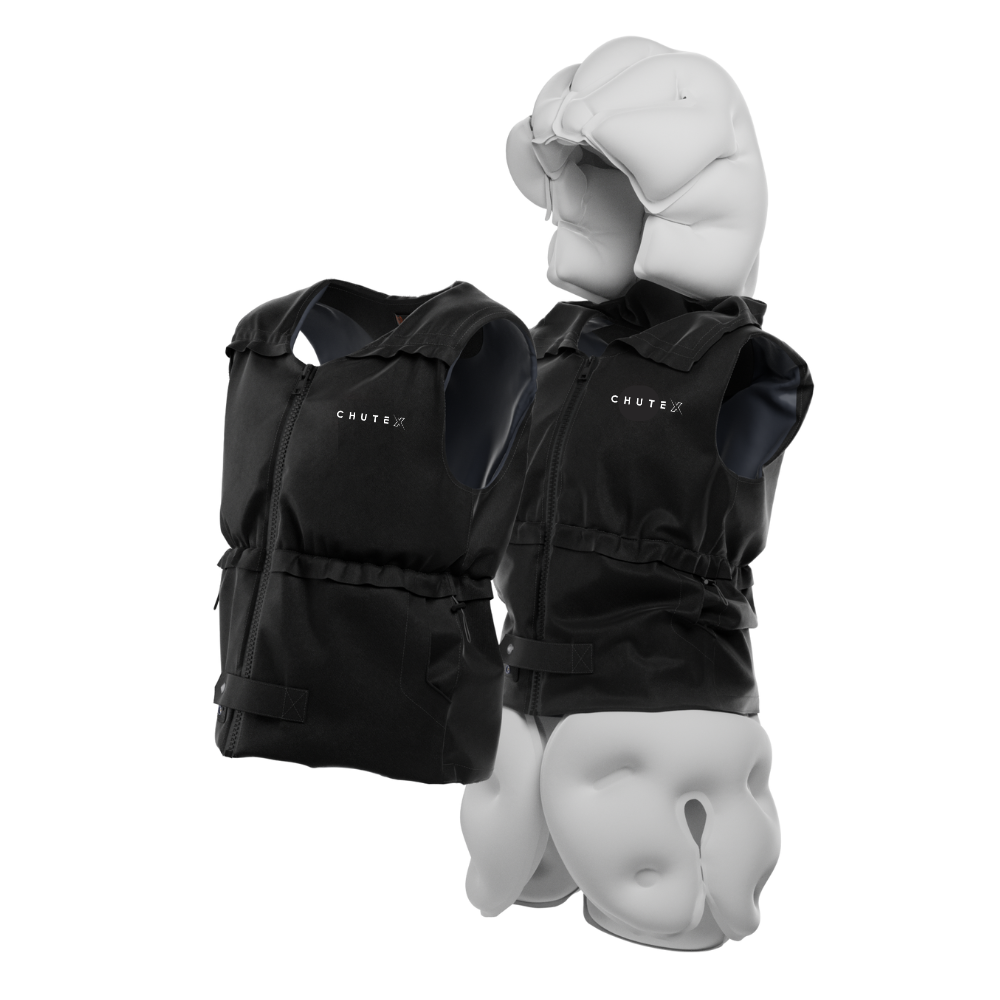
An airbag vest for elderly people is a wearable, reusable vest with motion sensors and gas cartridges. When the sensors recognise the signature of a fall, the airbag inflates in a fraction of a second, before the body hits the ground, to cushion the hips, lower back and head. It does not prevent the fall itself and it does not call 911 for you; it reduces the violence of the impact. This guide explains the mechanism, who benefits most, what it costs in the US and its limits, using CDC data on older-adult falls.
Why falls are the problem an airbag vest addresses
In the United States, more than 14 million adults aged 65 and older, one in four, report falling each year, and falls are the leading cause of injury and injury-related death in this age group (CDC). Roughly 3 million emergency department visits and about 1 million hospitalizations per year are due to older-adult falls, and nearly 319,000 older people are hospitalized for hip fractures each year. In 2019, 83% of hip-fracture deaths were caused by falls.
The death rate is rising: the age-adjusted fall death rate for adults 65+ increased by 21% between 2018 and 2024 (CDC, 2026). Most protective strategies work upstream, by reducing the risk of falling (strength and balance, medication review, home hazards, vision). An airbag vest works downstream: when a fall does happen, it reduces the energy delivered to the hip and the head.
How an airbag vest for seniors works, step by step
1. Sensors. The vest carries an inertial unit (accelerometer and gyroscope) that samples posture and acceleration many times per second. Walking, sitting down, bending or getting into a car produce patterns the algorithm knows; a fall produces a very different one: a sudden loss of support followed by an accelerated descent.
2. Detection. When the pattern of a fall is confirmed, the system triggers.
3. Inflation. Compressed-gas cartridges (helium on Elder) inflate chambers positioned over the hips and greater trochanters, the lower back and, depending on the model, the neck and back of the head, the zones where the most serious fall injuries occur (hip fractures, traumatic brain injury).
4. After the fall. The vest is reset by replacing the cartridges, which takes about 30 seconds on Elder, and can be worn again. Elder can also notify configured caregivers through the Chutex app after a deployment. It does not call emergency services: in the US, call 911.
Who benefits most from an airbag vest
People aged 65 and older who have already fallen once (falling once doubles the chance of falling again, per CDC), people with osteoporosis or a previous fragility fracture, adults recovering from hip or knee surgery, and people whose condition makes falls sudden and hard to break with the arms: Parkinson's disease with freezing of gait or postural instability, peripheral neuropathy, some epilepsies with drop attacks (atonic seizures), vestibular disorders.
The vest is worn over clothing, weighs about 2.6 lb (1.2 kg) on Elder, and needs no daily adjustment, which is what makes it realistic for someone who wants to keep walking, gardening and living at home. Families and caregivers value it because it protects continuously without a button to press.
What an airbag vest does not do
It does not prevent falls. It reduces the impact of a detected fall; it cannot eliminate fracture risk and does not detect every event (for example a slow slide from a chair may not trigger). It does not treat or prevent seizures and does not replace a prescribed seizure helmet, physical therapy, home adaptations or medical follow-up. It is not an emergency response system: there is no operator, no ambulance dispatch. In the United States, pair it with 911 and, if you want monitoring, with a medical alert (PERS) service.
Regulatory status: the Chutex Elder vest is personal protective equipment (CE category II PPE, designed and engineered in France). It is not a medical device and has not been cleared or evaluated by the FDA. Chutex makes no claim of Medicare or insurance reimbursement.
What an airbag vest costs in the United States
The Chutex Elder airbag vest sells for $879 in the United States, the same figure as the European price, with no VAT (export from France) and free tracked shipping; import duties, if any, are payable on delivery (DAP). Replacement cartridge sets are consumables: budget for one set per deployment. Returns within 14 days, 2-year warranty. HSA/FSA eligibility, if any, depends on your plan administrator.
For comparison, a hip protector (padded underwear) costs $40 to $150 per pair and protects only the hips, passively, only if worn correctly at the moment of the fall. A medical alert pendant costs $20 to $50 per month and calls for help after the fall. An airbag vest is the only one of the three that changes the impact itself.
Choosing an airbag vest: a short checklist
Detection speed (under 0.1 s), protected zones (hips at minimum; back and head are a plus), weight and comfort over clothing, reset cost and time after a deployment, false-trigger rate in daily movements, caregiver notification, battery life, and the honesty of the manufacturer about what the vest is and is not. Ask for the PPE classification and avoid any product presented as a medical device without an FDA clearance number.
Frequently asked questions
Is there an airbag vest for elderly people in the US?
Yes. The Chutex Elder airbag vest is a wearable, reusable vest for seniors and adults at risk of falling. It detects a fall and inflates to cushion the hips, back and head before impact. It is personal protective equipment designed in France and ships to the United States ($879, no VAT, free shipping).
Does an airbag vest prevent falls?
No. It reduces the impact of a detected fall on the hips, back and head. Fall prevention itself relies on strength and balance exercise, medication review, vision checks and home safety, as described in the CDC STEADI program. The vest is a complement to those measures.
Is the airbag vest FDA-approved?
No. Elder is personal protective equipment (CE category II), not a medical device. It has not been cleared or evaluated by the FDA and does not diagnose, treat or prevent any condition.
How much does an airbag vest for seniors cost?
The Chutex Elder vest costs $879 in the United States (no VAT, free shipping to the US), plus replacement cartridges after each deployment.
Does Medicare cover an airbag vest?
Elder is not durable medical equipment and Chutex makes no reimbursement claim. Ask your plan administrator about any HSA/FSA eligibility.
Can the vest call 911?
No. Elder can notify configured caregivers through the Chutex app after a deployment, but it is not an emergency response service. In the US, call 911; a medical alert (PERS) service can add 24/7 monitoring.
Related
Elder airbag vest for elderly people: the fall vest that inflates before impact · Fall protection for seniors at home: a practical US guide · Hip protectors vs airbag vest: which fall protection for seniors? · All US guides · Chutex United States