
United States · Guide · Updated 2026-09-10
Wall pulley exercises: 12 cable movements for strength and mobility at home
A wall pulley lets you load almost any movement pattern in any direction, with a constant, joint-friendly resistance: that is why it is the most used machine in physio clinics and why it works so well at home. Here are 12 movements covering pull, push, rotation, hips and shoulders, with resistance guidance and safety rules. The list applies to any cable machine; where relevant we mention what changes with a motorized pulley such as the Chutex Model I (2–50 kg, 2 kg steps).
Before you start
Set the anchor height for each exercise (low, mid, high). Start light: cable resistance feels heavier at the end of the range than a dumbbell of the same weight. Move slowly on the way back (the eccentric phase); with a motorized pulley the resistance stays constant, so control matters more. Stop if a movement hurts. If you are recovering from surgery, in supervised rehabilitation, pregnant or have a medical condition, adapt the programme with a health professional; a home pulley is fitness equipment, not therapy.
Pull: back and posture
1. Standing single-arm row (mid anchor): pull the handle to the ribs, elbow close, shoulder blade sliding back. 3 sets of 10 to 12 per side. 2. Seated or half-kneeling lat pull-down (high anchor): pull the handle down to the collarbone, elbows to the ribs. 3 × 10–12. 3. Face pull (high anchor, rope or two handles): pull toward the forehead with elbows high, squeeze the upper back, 3 × 12–15 light; excellent for desk posture. 4. Straight-arm pull-down (high anchor): arms almost straight, bring the handle to the thighs; 3 × 12.
Push: chest, shoulders, triceps
5. Standing single-arm press (mid anchor, back to the wall): push forward at chest height, trunk braced, 3 × 10–12 per side. 6. Triceps push-down (high anchor): elbows fixed at the sides, extend, 3 × 12–15. 7. Lateral raise (low anchor, cable across the body): raise the arm to shoulder height, 3 × 12–15 light.
Rotation and trunk
8. Standing woodchop (high to low): rotate the trunk and bring the handle diagonally down across the body, 3 × 10 per side. 9. Pallof press (mid anchor, side to the wall): hold the handle at the chest, press it straight forward and resist rotation, 3 × 8–10 holds of 3 seconds per side. Both build the anti-rotation strength that protects the lower back during daily lifts.
Hips and legs
10. Cable pull-through (low anchor, facing away): hinge at the hips with a straight back and stand up by squeezing the glutes, 3 × 12; the safest way to learn the hip hinge. 11. Cable squat (low anchor, facing the wall): hold the handle, sit back into a squat and stand, the cable counterbalances and helps beginners and older adults keep the heels down, 3 × 10–12. 12. Standing hip abduction (low anchor, ankle strap): move the leg sideways against resistance, 3 × 12–15 per side, useful for hip stability and balance.
Putting it together, and what changes with a motorized pulley
A full-body session: pick one movement from each group (pull, push, rotation, hips), 3 sets each, twice a week; add face pulls and hip abductions on the other days for posture and balance. Progress by adding a step of resistance when you finish every set cleanly.
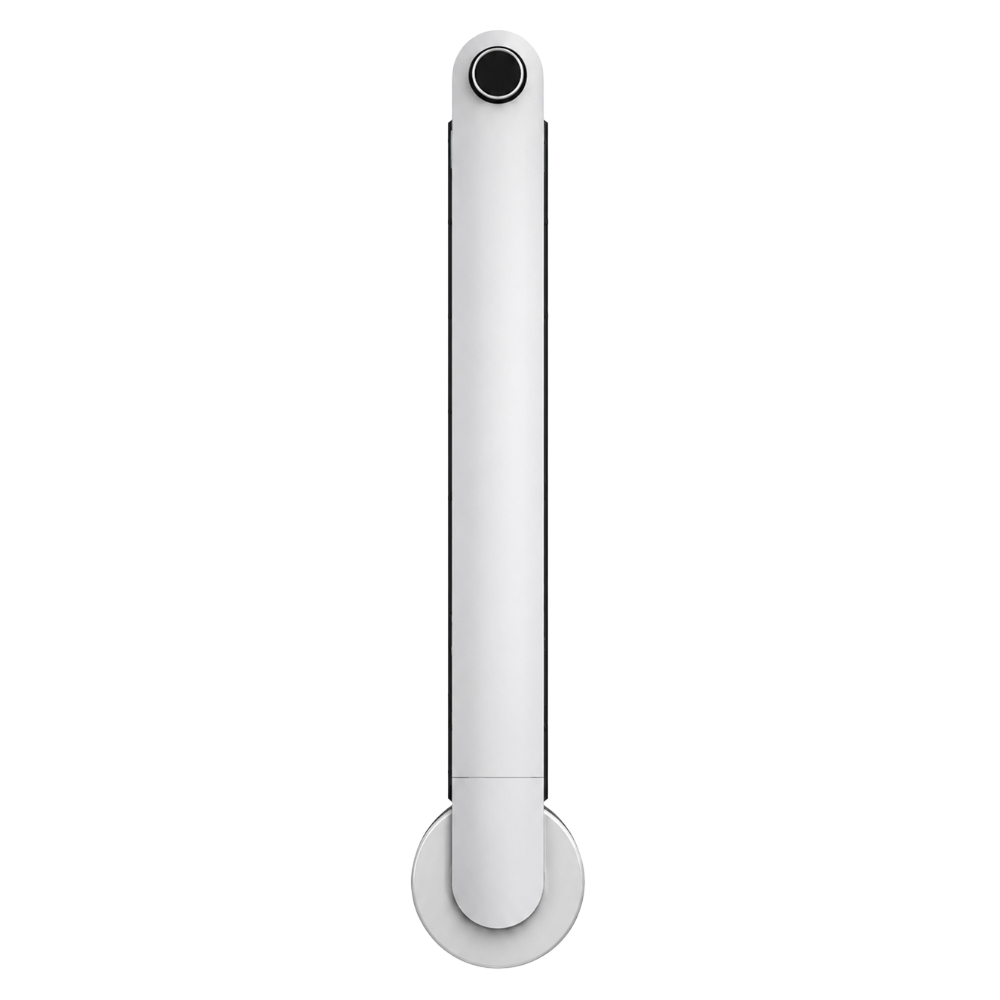
With a weight-stack pulley you change plates; with a motorized pulley such as the Chutex Model I you change resistance from 2 to 50 kg in 2 kg steps from the app, the resistance stays constant through the movement, and the app counts sets and times rest across 180+ guided exercises, with sessions exportable as PDF for a coach or physical therapist. Model I is wall-mounted (load-bearing wall or compatible support required), $1,990 one-time, free shipping to the US. It is connected fitness equipment, not a physiotherapy or medical device.
Frequently asked questions
What exercises can you do with a wall pulley?
Almost every movement pattern: rows, pull-downs, face pulls (pull); presses, triceps push-downs, lateral raises (push); woodchops and Pallof presses (rotation); pull-throughs, cable squats and hip abductions (hips and legs). The 12 movements above cover a full body programme.
How much resistance should I use on a cable machine?
Start light and pick a resistance you can move for 10 to 12 controlled repetitions with two left in reserve. Cable resistance feels heavier at the end of the range than a dumbbell of the same weight. Add one step when every set is clean.
Are wall pulley exercises good for seniors?
Cable training is joint-friendly and scalable, which is why it is common in physio clinics and senior living. Start with very light loads (2 kg), use the cable squat and pull-through to learn safe patterns, and adapt with a health professional if fragile or in pain.
What is the difference between a motorized pulley and a weight stack?
A motorized pulley such as the Chutex Model I changes resistance electronically in small steps, keeps it constant through the movement and logs sets in an app; a weight stack changes in fixed plates. Both train the same movements.
Does a wall pulley treat back pain?
No. It is fitness equipment. Cable exercises can build the strength that supports the back, but they do not diagnose or treat any condition; persistent or radiating pain needs a clinician.
Related
Model I wall-mounted cable machine: 2–50 kg motorized resistance ($1,990, one-time) · Best smart home gym in 2026: wall-mounted cable machines compared · All US guides · Chutex United States