United States · Guide · Updated 2026-10-13
Normal resting heart rate: chart by age and sex, and when to see a doctor
For most adults, the American Heart Association says a normal resting heart rate is 60 to 100 beats per minute when you are sitting or lying down, calm, and feeling well. Trained athletes can be lower. A US survey mean is not the same as that clinical range. Medical review in progress.
What counts as a normal resting heart rate
Your resting heart rate is how many times your heart beats per minute when you are not exercising. The American Heart Association, on the page reviewed May 13, 2024, says a normal resting heart rate is between 60 and 100 beats per minute if you are sitting or lying down, calm, and feeling well. The same association’s exercise page, reviewed August 12, 2024, repeats that range for most adults and says an athlete or a more active person may rest as low as 40 beats per minute.
That 60 to 100 band is a clinical description, not a personal target. The exercise page also says that, for resting heart rate, lower is usually better because the heart muscle is in better condition. The heart-rate page says a rate under 60 may be bradycardia and is not always a medical problem. It is common in athletes, it can come from a medicine such as a beta blocker, and heart rate may also be lower while sleeping. A rate over 100 may be tachycardia. A high rate is not always a sign of a problem. It can be temporary.
These pages do not give a different normal band for women and men, or a different band for each decade of adult life. Age and sex show up in survey averages, below, not as a second definition of normal. This information does not replace advice from a health professional.
Resting heart rate chart by age
| Group | Mean beats per minute |
|---|---|
| Adult men, ages 20 and over | 71 |
| Men, 20 to 39 | 71 |
| Men, 40 to 59 | 71 |
| Men, 60 to 79 | 70 |
| Men, 80 and over | 71 |
| Adult women, ages 20 and over | 74 |
| Women, 20 to 39 | 76 |
| Women, 40 and over | 73 |
| Boys and male teens, overall | 86 |
| Male infants under 1 year | 128 |
| Male teens, 16 to 19 | 72 |
| Girls and female teens, overall | 90 |
| Female infants under 1 year | 130 |
| Female teens, 16 to 19 | 79 |
The chart is the means printed in the narrative of the National Center for Health Statistics report, not a 5th-to-95th percentile table. The percentile columns in the PDF did not extract cleanly when this page was written, so they are not copied here. Across the whole US sample in that report, mean resting pulse falls from 129 beats per minute in infancy to 96 by age 5, then plateaus in adulthood at 72.
For adult men, the report found no significant trend across the four adult age groups. For adult women, mean resting pulse did fall across those groups, and the authors describe a plateau later than in men, around ages 40 to 59. The American Heart Association’s age chart on the exercise page is a target zone for workouts (about 50 to 85 percent of an age-predicted maximum). It is not a resting heart rate chart. Do not read 100 to 170 beats per minute at age 20 as a resting value.
Resting heart rate for women and for men
In the same NHANES normative sample, the mean for adult women was 74 beats per minute and the mean for adult men was 71. The report says the average difference between adult women and men was 3 beats per minute. Within each adult age group, women’s means were higher than men’s, except at 80 and over, where the difference was no longer statistically significant.
Using the traditional clinical cut points in that sample (over 100 for tachycardia, under 60 for bradycardia), 1.3 percent of adult men and 1.9 percent of adult women had tachycardia. Bradycardia was more common in men (15.2 percent) than in women (6.9 percent). Those are prevalences in a selected sample, not a reason to call a personal reading abnormal. The American Heart Association still describes 60 to 100 as the normal adult band for both sexes.
A resting heart rate for women is not a separate product category. The useful comparison is your own morning series, taken the same way, against that 60 to 100 band and against the survey mean for your age and sex.
Athletes and a low resting heart rate
The American Heart Association says a lower resting rate is common for people who train, because the heart muscle does not have to work as hard, and that a more active person may rest as low as 40 beats per minute. It also says a low amount of physical activity does not usually change the resting rate much. A rate of 50 can sit in that athletic range and still be under the 60 line the same association uses when it describes bradycardia.
Fifty is not automatically good and not automatically dangerous. The heart-rate page says to tell a health professional if your rate has been slower or faster than usual, especially with weakness, dizziness, or a feeling that you might faint. The NHANES report also cites a revised research cut point of under 50 beats per minute for bradycardia. That cut point described 1.6 percent of the normative adult men and 0.3 percent of the normative adult women. It is not a fitness score.
How to measure resting heart rate accurately
The American Heart Association’s exercise page says a good time to check is in the morning, after a night’s sleep, before you get out of bed or have coffee. On the heart-rate page, the most accurate manual reading at the wrist is a full 60-second count with the index and middle fingers on the inner wrist. The exercise page instead says to count for 30 seconds and multiply by 2, and not to use the thumb.
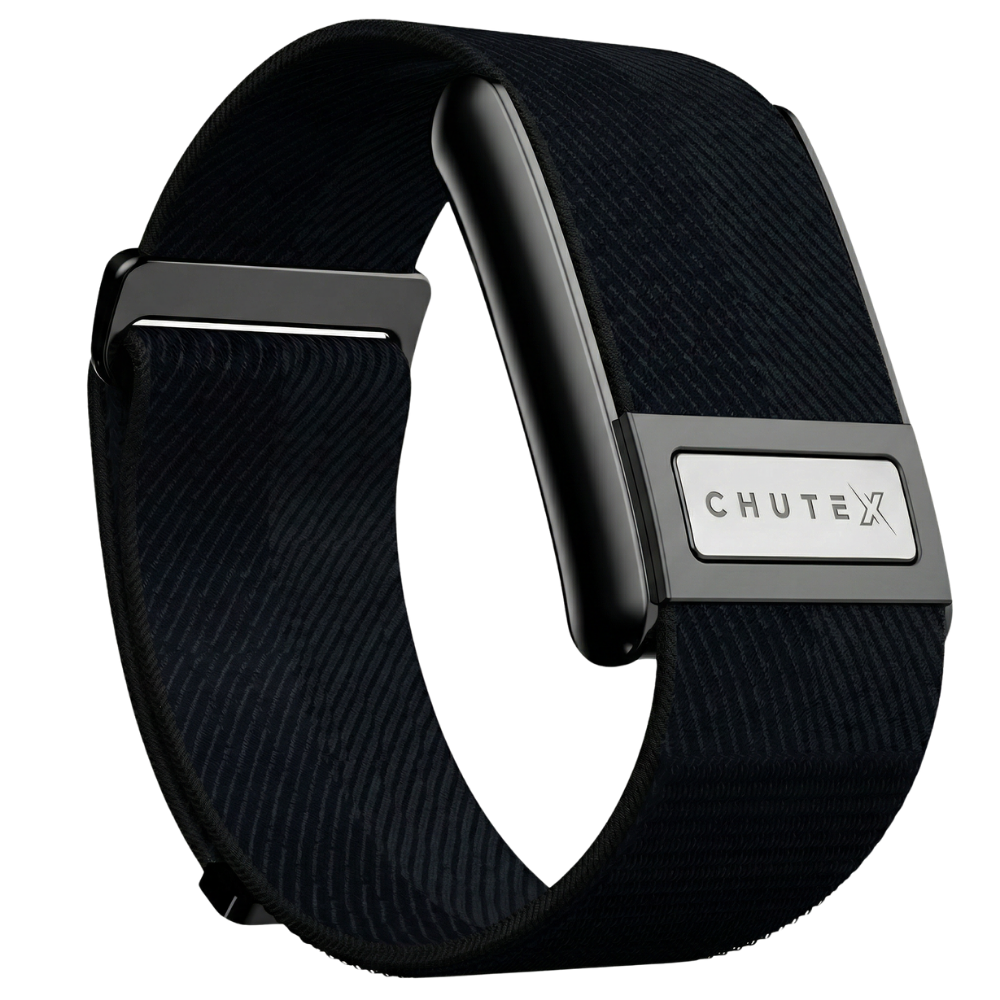
The NHANES exam was different again. Adults sat quietly for about four minutes. A trained examiner counted the radial pulse for 30 seconds and doubled it. That method produces only even numbers. A wrist band worn overnight is a third method. Elio tracks resting heart rate trends together with sleep and nighttime heart-rate variability. A night or morning trend is more comparable from day to day than a pulse taken after stairs or coffee. It is not the NHANES seated exam, and it is not a diagnosis.
Elio is a wellness band. It is not a medical device and it has not been cleared or evaluated by the FDA. In an emergency in the United States, call 911. Medical teleconsultation with Chutex is currently available in France.
What raises resting heart rate
On the page reviewed May 13, 2024, the American Heart Association lists factors that change heart rate. Outside temperature and a rise in body temperature can raise it. Heart rate may go up a little when you first stand, then settle within a few minutes. It rises with harder exercise, and it does not fall back to the resting rate the moment you stop. Stress, anxiety, happiness, sadness, and pain can raise the pulse. People with obesity might have a higher rate than people without obesity.
Medicines can move the rate the other way. Beta blockers and calcium channel blockers can slow it. The same page says that if you take a beta blocker you may be asked to log your heart rate, and to ask when and how often to do that. This page does not list caffeine, alcohol, or dehydration as causes, because those words are not on the American Heart Association page that was read.
How to decrease resting heart rate
The American Heart Association does not publish a number of beats you should expect to lose. It says people who exercise often should see the rate return toward normal sooner after effort, and that a trained heart can rest lower, sometimes near 40 in an athlete. It also says that a small amount of activity usually does not move the resting rate much.
There is no Chutex program that promises a lower resting heart rate. If the rate is high for you, the useful step is the same measurement each morning, then a conversation with a clinician if it stays high or if you have symptoms. Do not change a heart medicine to chase a lower number.
When to see a doctor
The American Heart Association says to tell your health professional if your heart rate has been slower or faster than usual, including if you have felt weak, dizzy, or as if you might faint. Call 911 if your heart rate is suddenly very high or very low for you, especially with chest pain, shortness of breath, dizziness, fainting, or other signs that something is not right.
A resting rate over 100 is the line that page uses for possible tachycardia. A resting rate under 60 is the line it uses for possible bradycardia, with the exceptions above for athletes, sleep, and some medicines. This information does not replace advice from a health professional. Medical review in progress.
Frequently asked questions
What is a normal resting heart rate for my age?
For most adults the American Heart Association uses one band, 60 to 100 beats per minute, not a different band per decade. In the NHANES 1999-2008 normative sample, mean seated pulse was about 71 in adult men and 74 in adult women, with women aged 20 to 39 at 76 and women 40 and over at 73. Those are averages, not a personal target.
Is a resting heart rate of 50 good?
Fifty is below the 60 line the American Heart Association uses when it describes bradycardia, and it is inside the athletic range that can go as low as 40. The association says a rate under 60 is not always a problem, especially in athletes, in sleep, or on some medicines. Tell a clinician if 50 is new for you or if you feel weak, dizzy, or faint.
Why is my resting heart rate going up?
The American Heart Association lists heat, a higher body temperature, standing up, exercise, stress, strong emotion, pain, and larger body size among the reasons a rate rises. Some medicines slow the rate instead. A single high morning is not a diagnosis. If the rate stays faster than usual, tell a health professional.
What resting heart rate is too high?
On the American Heart Association heart-rate page, a resting rate over 100 beats per minute may be tachycardia. That is not always an emergency. Call 911 if the rate is suddenly very high for you and you have chest pain, shortness of breath, dizziness, or fainting.
What is a healthy resting heart rate for women?
The American Heart Association does not publish a separate healthy band for women. The NHANES normative mean was 74 beats per minute for adult women and 76 for women aged 20 to 39, about 3 beats higher than adult men. The clinical description remains 60 to 100 while sitting or lying down, calm, and feeling well.
What is a good resting heart rate by age for men?
Adult men in the NHANES normative sample averaged 71 beats per minute at 20 to 39 and at 40 to 59, 70 at 60 to 79, and 71 at 80 and over. The report found no significant age trend across those four groups. Good, in the American Heart Association’s wording, is still the 60 to 100 band, lower in trained athletes.
How should I check my average resting heart rate?
Use the same method each morning, before coffee, and keep several days rather than one number. The American Heart Association describes a 60-second wrist count, and also a 30-second count multiplied by 2. A night trend from a wellness band is a third method. Average those comparable readings. Do not mix a count after exercise with a count in bed.
Related
Elio screenless wellness band ($264, one-time) · Heart rate variability (HRV): what it means, normal ranges and how to raise it · Oura Ring alternatives in 2026: smart rings and bands without a monthly fee · Whoop alternatives in 2026: screenless trackers without a membership · How much deep sleep do you need? Normal amounts, and how to get more · VO2 max: chart by age and sex, how to measure it, how to improve it · REM sleep: what it is, how much you need, and what affects it · Best HRV monitor in 2026: chest straps, rings and screenless bands compared · All US guides · Chutex United States