United States · Guide · Updated 2026-10-14
REM sleep: what it is, how much you need, and what affects it
NINDS says REM sleep first begins about 90 minutes after you fall asleep, with longer REM periods later in the night. Adults need 7 to 9 hours of sleep in total, and that total is not a REM quota. A StatPearls chapter labels REM as 25 percent of sleep. Medical review in progress.
What REM sleep is
REM sleep means rapid eye movement sleep. The National Institute of Neurological Disorders and Stroke, on its Brain Basics page reviewed 25 February 2025, says there are two basic types of sleep: rapid eye movement sleep and non-REM sleep. Within non-REM sleep, that page says scientists have identified three different stages. Each stage is linked to specific brain waves and neuronal activity.
You cycle through non-REM and REM sleep several times in a typical night. NINDS says the REM periods become increasingly longer and deeper later in the sleep session. REM sleep first occurs about 90 minutes after falling asleep. Your eyes move rapidly from side to side behind closed eyelids. Mixed frequency brain activity becomes closer to wakefulness. Breathing becomes faster and irregular, and heart rate and blood pressure rise to near waking levels.
Most dreaming occurs during REM sleep, although NINDS also says some dreaming can occur in non-REM sleep. Arm and leg muscles become temporarily paralyzed, which prevents you from acting out dreams. The brainstem, especially the pons and medulla, sends signals to relax the muscles used for posture and limb movement. During REM the thalamus is active and sends the cortex images, sounds, and other sensations that fill dreams. In other stages the thalamus is quieter.
This information does not replace advice from a health professional. Medical review in progress.
How much REM sleep you need
How much REM sleep do you need, and how much REM sleep should you get: the NINDS page does not set a minute quota or a percent target. It does say that as you age, you spend less of your time in REM sleep. It also gives total sleep, which is a different number. Most adults require 7 to 9 hours of sleep at night. Babies initially sleep 16 to 18 hours a day. School-age children and teens need about 9.5 hours a night. NINDS adds that there is no magic amount of sleep that works for everybody of the same age.
A StatPearls chapter, Physiology, Sleep Stages, last updated 26 January 2024, labels REM as 25 percent. The same chapter says the first REM period is short, typically about 10 minutes, and that the final cycle can last up to 1 hour. It also says about 75 percent of sleep is spent in the non-REM stages, with the majority in N2. Those shares are the chapter's labels. They are not a personal prescription, and this page does not convert 25 percent into a required number of minutes for you.
How much REM sleep should I get is the same limit. The 7 to 9 hour adult range on the NINDS page is total sleep. It includes non-REM and REM. A night that meets that range is not proof that the REM share matched the StatPearls label.
Stages of sleep, including REM
| What people search | What these two sources say |
|---|---|
| REM sleep | One type of sleep, not a stack of four REM stages. Periods get longer later in the night. |
| Non-REM sleep stages | NINDS: three stages. Stage 1 is the changeover. Stage 2 is light sleep and takes more of the night than the other stages. Stage 3 is deep sleep, longer in the first half of the night. |
| 4 stages of non-REM sleep | Not the count on the NINDS page. That page says three non-REM stages. |
| Sleep stages N1, N2, N3, REM | StatPearls uses N1, N2, and N3 for the three non-REM stages, then REM. It also counts wake, so its list is wake, N1, N2, N3, and REM. |
| How many stages of sleep are there, including REM | Counting NINDS stage 1, stage 2, stage 3, and REM gives four sleep stages. Counting StatPearls wake plus those four gives five labels. Neither source describes four stages of REM. |
How does REM sleep differ from the other sleep stages: NINDS places the longest stage 3 periods in the first half of the night, and the longer REM periods later. Stage 3 is the deep sleep you need to feel refreshed, with heartbeat and breathing at their lowest and muscles relaxed. REM is the later type, with rapid eye movement, brain activity closer to waking, faster irregular breathing, and temporary paralysis of the arms and legs.
NHLBI, on the stages page read 14 October 2026, says a cycle starts over every 80 to 100 minutes, usually four to six cycles a night, with more REM later. It also says you do not have as much REM in colder temperatures, because the body does not regulate temperature properly during REM. That is a temperature note, not a training plan.
The guide to deep sleep on this site covers stage 3. The address /en-us/guides/sleep-stages/ was not linked, because it returned 404 on 14 October 2026.
What reduces REM sleep
The StatPearls chapter states that alcohol, benzodiazepines, and barbiturates are associated with decreased REM sleep. That is an association named in the chapter. It is not a dose, and it is not a promise that stopping a drink will add a stated number of minutes. This page does not tell anyone to start or stop a medicine.
NINDS, in its sleep tips, says to avoid alcoholic drinks before bed, along with caffeine and nicotine late in the day. The same tips say to go to bed and wake up at the same time, and to keep the room comfortable. Those are sleep habits on that page. They are not a measured REM percentage.
NINDS also says factors that influence sleep-wake needs include medical conditions, medications, stress, the sleep environment, age, and what you eat and drink, and that the greatest influence is light. Stress is on that list as a factor in sleep need. The page does not give a separate REM drop for stress. Age is more direct for REM: you spend less of your time in REM sleep as you age.
A short night matters because the longer REM periods come later. StatPearls says the first REM period is typically about 10 minutes and the last can last up to an hour. NINDS says REM periods get longer later in the session. A night that ends early has less room for those later periods. That is not a formula that turns a lost hour into a lost minute count.
REM sleep, dreams, and eye movement
REM sleep eye movement is in the name. NINDS says the eyes move rapidly from side to side behind closed eyelids. The chapter on sleep stages adds that the skeletal muscles are without movement, except the eyes and the diaphragm, and that breathing is erratic. Most dreaming is in REM, and some dreaming also happens outside it.
Is REM sleep good: it is a normal part of the night, not a score to chase. NINDS says memory consolidation most likely requires both non-REM and REM sleep. StatPearls says REM is associated with dreaming and is not considered a restful sleep stage. Those two sentences can both be true. REM is not stage 3, and it is not optional in the description NINDS gives of a typical night.
Acting out dreams is a medical question. NINDS describes ordinary REM as temporary paralysis of the arm and leg muscles so that you do not act out dreams. This page does not cover REM sleep behavior disorder. That decision sits outside this wave.
How to get more REM sleep, and what a tracker can show
How to get more REM sleep, and how to increase REM sleep, have no minute gain in the sources read here. NINDS does not prescribe a sound, a spray, or a score. The facts that touch the question are the ones already named: later cycles hold the longer REM periods, alcohol is associated with less REM in the StatPearls chapter, and you spend less time in REM as you age. A regular schedule and less alcohol before bed are sleep tips on the NINDS page. They are not a guaranteed rise in REM minutes.
A REM sleep tracker on a wrist or a finger is not the study NINDS and StatPearls describe. Sleep studies classify stages with sensors that record eye movement and brain activity. StatPearls calls polysomnography the procedure that uses an electroencephalogram, an electrooculogram, and an electromyogram, among other signals, and says it is the standard test for several sleep-related breathing disorders. A consumer band does not become that test because it prints the word REM.
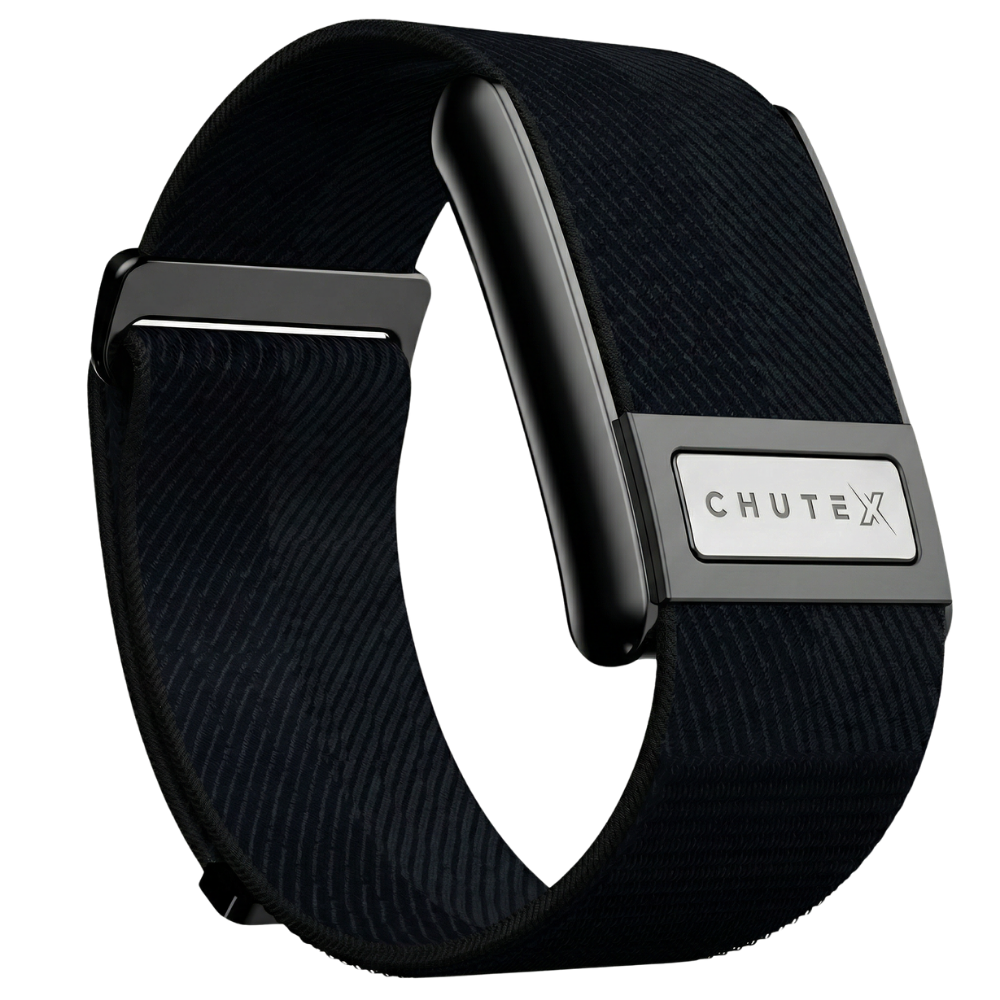
Elio, on the US product page read 14 October 2026, is a screenless wellness band. The pack is 264 US dollars, one payment, with no subscription. Battery life is 15 days. The page says Elio tracks sleep and its stages, and heart rate variability, and that it is not a diagnostic device. A stage name from that band is a wellness estimate. It is not an electroencephalogram, and this page does not claim the band matches the NINDS or StatPearls stage rules.
In an emergency in the United States, call 911. Medical teleconsultation with Chutex is currently available in France. Medical review in progress.
Frequently asked questions
What is REM sleep?
REM sleep means rapid eye movement sleep. NINDS says it is one of two types of sleep, beside non-REM, and that it usually starts about 90 minutes after you fall asleep. The eyes move quickly, most dreaming happens here, and the arm and leg muscles are temporarily paralyzed.
How much REM sleep do you need?
NINDS does not set a required number of minutes. It says adults need 7 to 9 hours of sleep in total, and that you spend less time in REM as you age. A StatPearls chapter labels REM as 25 percent of sleep, with a first period of about 10 minutes and a last period of up to an hour. That label is not a personal quota.
How much REM sleep should you get a night?
Same answer. The nightly figure in these sources is total sleep, 7 to 9 hours for most adults, not a REM-only hour target. REM periods get longer later in the night.
How many stages of non-REM sleep are there?
Three, on the NINDS page reviewed in February 2025. Stage 1, stage 2, and stage 3. The search for four stages of non-REM sleep does not match that page. REM is a separate type, not a fourth non-REM stage.
How many stages of REM sleep are there?
These sources do not describe four stages of REM, or different named stages inside REM. REM is one type. What changes across the night is the length of the REM periods, which get longer later.
Is REM sleep good?
It is a normal part of sleep. NINDS says memory consolidation most likely needs both non-REM and REM. StatPearls says REM is not considered a restful stage. It is not the same thing as deep sleep.
How to get more REM sleep?
No minute gain is stated in the pages read here. Alcohol is associated with decreased REM sleep in the StatPearls chapter. NINDS advises avoiding alcoholic drinks before bed and keeping a regular schedule. Neither source promises that a habit will add a stated number of REM minutes.
Can a wearable measure REM sleep the way a sleep study does?
No. A sleep study uses eye-movement and brain-activity sensors. Elio's US page says the band tracks sleep stages as a wellness estimate and is not a diagnostic device. That estimate is not the NINDS recording.
Related
Elio screenless wellness band ($264, one-time) · Normal resting heart rate: chart by age and sex, and when to see a doctor · Heart rate variability (HRV): what it means, normal ranges and how to raise it · Oura Ring alternatives in 2026: smart rings and bands without a monthly fee · Whoop alternatives in 2026: screenless trackers without a membership · How much deep sleep do you need? Normal amounts, and how to get more · VO2 max: chart by age and sex, how to measure it, how to improve it · Best HRV monitor in 2026: chest straps, rings and screenless bands compared · All US guides · Chutex United States